We use cookies to ensure a comfortable browsing experience on our website and to continuously improve its features, performance, and usability through traffic analysis. Learn more.

Are you struggling with tears and holes appearing in your fabric every time you start your tufting gun? Understanding why your backing cloth is failing is the first step toward creating professional-grade rugs without the frustration of constant repairs. Read this comprehensive guide to master the art of fabric tension and technique so you can stop wasting material and start tufting with confidence.
The importance of drum-tight tension
One of the most frequent mistakes beginners make is failing to stretch their fabric tight enough. If the material is even slightly loose, the needle of the tufting gun will push the fabric away rather than piercing it cleanly. This creates a snagging effect where the needle catches the fibers and pulls them apart, leading to a jagged tear. You should be able to bounce a coin off the surface of your cloth; if it feels soft or bouncy, it is not ready for tufting.
Achieving the perfect tension requires a high-quality tufting frame equipped with sharp carpet gripper strips. When you attach your cloth, start from one corner and work your way across, constantly pulling the material until the woven lines are perfectly straight. If those lines begin to curve or wave, your tension is uneven, which creates weak points in the weave that are prone to ripping under the mechanical force of the gun. You must re-adjust the cloth periodically during a long session because the vibrations of the machine can naturally loosen the grip over time.
Choosing the right primary backing
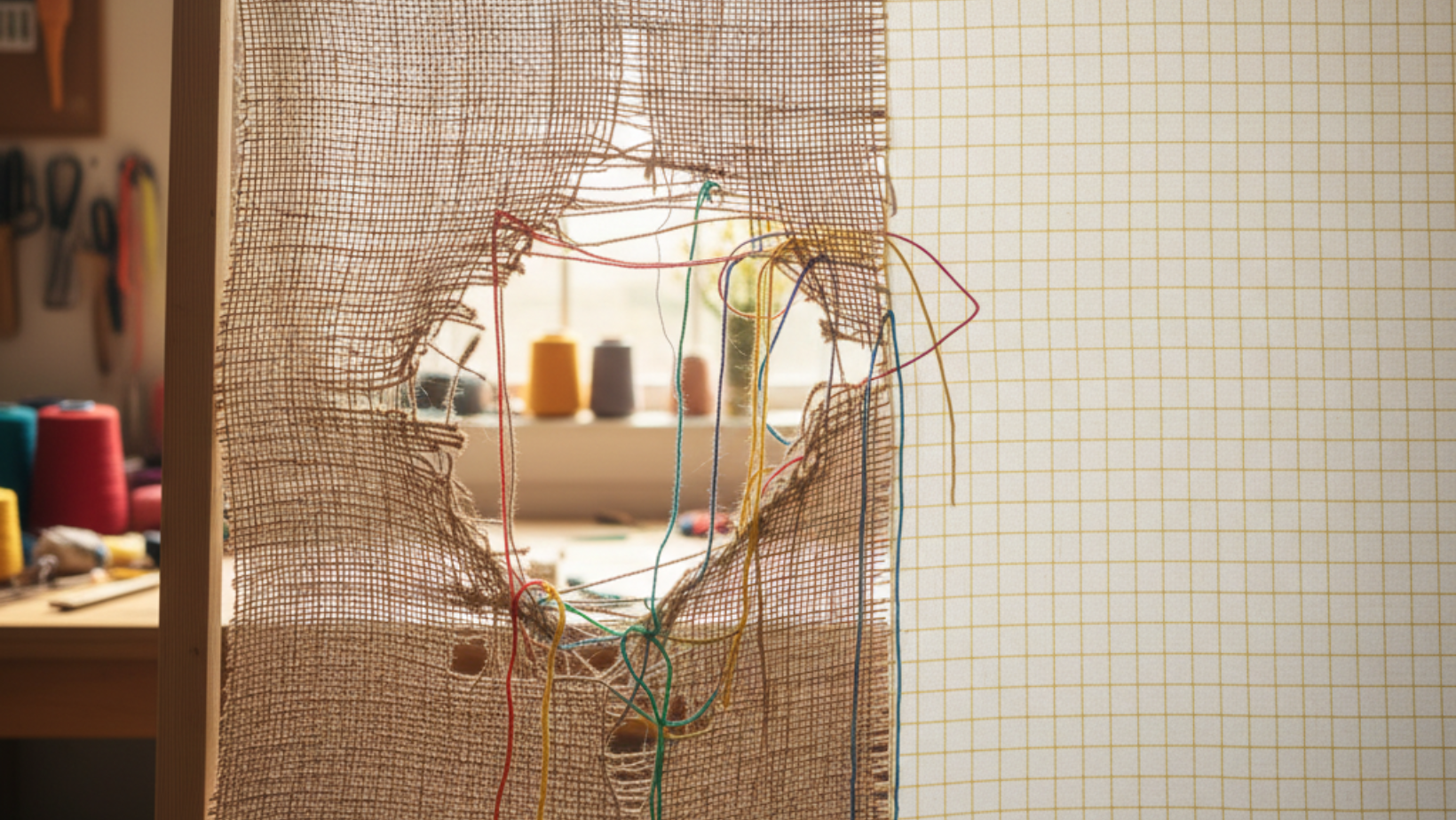
Not all fabrics are created equal when it comes to the intense physical demands of a tufting gun. Many hobbyists attempt to save money by using burlap, hessian, or heavy cotton ducks, but these materials lack the structural integrity and flexibility required for high-speed needle penetration. Burlap is particularly notorious for ripping because its fibers are brittle and break easily instead of moving aside to accommodate the yarn.
The gold standard for the industry is 100% polyester primary tufting cloth or a specialized polyester-cotton blend. These fabrics are specifically engineered with a weave that allows the needle to pass through without severing the threads. A professional cloth often features integrated marking lines every two inches, which serve a dual purpose: they help you align your design and act as a visual indicator of whether your fabric is stretched evenly. Investing in the right material from the start will save you more money in the long run than replacing cheap, torn fabrics.
Correct tufting gun pressure and angle
Even with the best fabric and perfect tension, your technique can still cause significant damage. A common error is failing to apply constant forward pressure against the frame. If the foot of the tufting gun lifts away from the cloth while the needle is reciprocating, the needle will act like a saw, cutting through the warp and weft of the fabric. You must lean into the machine and ensure the metal footplate remains flush against the cloth at all times.
Furthermore, the angle at which you hold the gun is critical for the health of your backing material. The needle must enter the fabric at a perfectly perpendicular 90-degree angle. If you tilt the gun upward, downward, or to the side, the needle enters at an oblique angle, which puts immense lateral stress on the weave. This stress often results in long, horizontal tears that are difficult to repair. Focus on your body positioning and ensure your arms are steady so the gun moves in a fluid, controlled motion across the surface.
Moving in the right direction
A tufting gun is designed to move in a specific direction, typically upward or following the orientation of the needle head. Attempting to tuft sideways or downwards without rotating the gun head will almost certainly lead to the fabric ripping. When you move the gun in a direction it is not pointed toward, the needle drags through the fabric fibers instead of punching through them cleanly.
This dragging motion creates a cheese-cutter effect where the needle slices through the backing cloth. Always ensure that the front of the gun is facing the direction of your movement. If you need to change directions to fill a shape, stop the machine, rotate the entire gun so the foot is pointing the new way, and then resume.
Managing machine speed and yarn feed
The speed of your tufting gun and the way your yarn is fed into the machine play subtle but vital roles in fabric preservation. If your machine speed is set too high for your hand movement, the needle will strike the same spot multiple times, effectively pulverizing the fabric. Beginners should always start at the lowest speed setting to build muscle memory and ensure they are moving the gun fast enough to keep up with the needle strikes.
Additionally, if your tufting yarn is tangled or the cone is not feeding smoothly, it creates tension on the needle. This tension can pull the needle slightly off-track or cause it to snag the fabric as it retracts. A snagged thread often leads to a hole that quickly expands into a large rip under the pressure of the surrounding tufts. Always ensure your yarn moves freely from the cone through the guides and into the gun to prevent any unnecessary resistance that could compromise the fabric.
How to repair small tears before they grow
If you do experience a small rip, it is crucial to address it immediately rather than tufting over it. A small hole will rapidly expand due to the high tension of the surrounding cloth. For minor snags, you can often use a curved needle and upholstery thread to carefully sew the hole shut using a darning technique. This reinforces the area and allows you to continue tufting, though you should be extra cautious when working near the repaired section.
If the tear is too large to sew, you may need to apply a small patch of tufting cloth to the back of the frame using fabric glue or a heavy-duty adhesive. However, repairs are always a second-best option compared to prevention. By focusing on the fundamentals of tension, material selection, and gun handling, you can eliminate the primary causes of fabric failure. Consistent practice and attention to the mechanical feedback of your gun will eventually make ripping a rare occurrence in your studio.
Ripping your fabric is usually caused by a combination of loose tension, using improper backing materials like burlap, and failing to maintain consistent pressure with the gun. To fix these issues, you must prioritize a drum-tight frame and use professional polyester primary cloth that can withstand the needle's impact. Always ensure your gun is perpendicular to the frame and moving in the direction the needle is pointing to avoid snagging. By mastering these technical elements and keeping your equipment maintained, you will prevent tears and create durable, high-quality rugs.