We use cookies to ensure a comfortable browsing experience on our website and to continuously improve its features, performance, and usability through traffic analysis. Learn more.

Tufting meaning
(Updated: April 2026)
Tufting has gone from a niche craft to one of the most talked-about creative hobbies in Europe. People who have never touched a needle in their lives are now making their own rugs at home, and the results speak for themselves. If you have ever wondered what tufting actually is, how it works, or whether you could do it yourself, you are in exactly the right place.
What is tufting? The definition explained simply
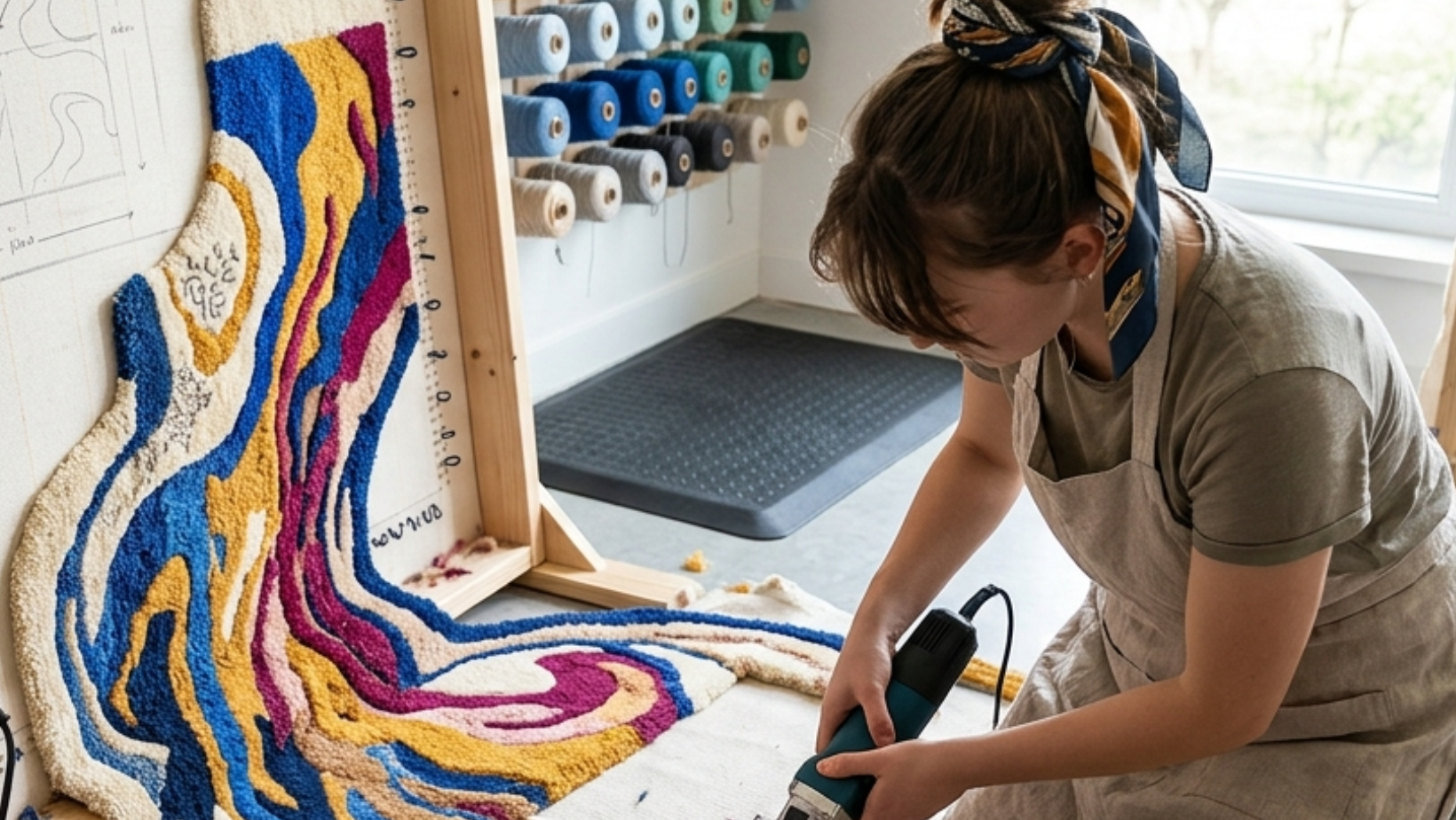
Tufting is a textile technique in which yarn is pushed through a base fabric to create a raised, textured surface called pile. This is the core tufting definition that applies whether you are making a rug, a cushion, a wall hanging, or any other fabric-based piece.
The word comes from the English noun "tuft", meaning a small bunch or cluster of fibers held together at the base. The tufting meaning in a craft context is essentially the same. You are creating clusters of yarn that stand upright from a fabric surface.
A tufter is simply a person who practises this technique, whether as a hobby, a creative outlet, or a professional skill.
What does tufting mean in practice?
It means using a tufting gun or a punch needle to drive yarn through a stretched backing fabric, loop by loop, row by row, until a complete design is formed. The process is faster than hand-knotting, more accessible than weaving, and endlessly flexible in terms of design.
The loops can be left intact to create a smooth, durable surface, or cut open to produce a soft, plush finish – more on that difference in the cut vs. loop guide.
Tufting means making something entirely your own. From the pattern and the colors to the size and the texture with a tool that anyone can learn to use.
What you need to get started with tufting
Getting started with tufting does not require years of experience or a professional studio. With the right combination of materials and tools, even a complete beginner can create a beautiful rug on their very first attempt. Knowing what to buy before you begin will save you time, frustration, and money.
The most important material: Tufting fabric
The fabric you stretch onto your frame is the foundation of the entire project. Not every textile works. The backing must be dense enough to hold the yarn firmly in place while being open enough to let the needle pass through cleanly.
The most beginner-friendly options are primary tufting cloth and monks cloth, each with its own strengths depending on your project size and design complexity.
Thin or everyday cotton fabrics are a common mistake among beginners. They tear under the tension of the frame and fail to grip the yarn, which causes uneven lines and a messy final result. Always choose a fabric specifically designed for tufting.
Yarn, glue and the tufting frame
The yarn you choose will define the texture, color depth and durability of your finished piece. Wool and acrylic are the most widely used options. Thicker yarn fills the backing faster and suits bold, graphic designs, while thinner yarn works better for fine details and lettering.
A tufting frame holds your backing cloth stretched tight like a drum. Without stable tension, the fabric shifts during tufting and the stitches become uneven. Many beginners build their own frame from wood, while others prefer a ready-made solution.
After the tufting is finished, latex-based carpet glue is applied to the back to lock every loop in place permanently. This step is what turns a tufted piece into a proper, durable rug.
Tools that make the difference
Beyond the tufting gun itself, a few additional tools have a significant impact on the quality of your results.
- Duckbill scissors allow clean, precise trimming along the edges.
- A carpet trimmer helps you shear the surface to a uniform pile height.
- An art projector is incredibly useful for transferring complex designs onto the backing fabric accurately.
If you are unsure where to start, a complete starter kit is often the smartest choice. It bundles the essential tools together at a better price than buying everything separately, and it removes the guesswork from your first purchase.
Ready to start tufting?
Tufting is one of those crafts that rewards you quickly. The learning curve is short, the results are visible within hours, and every finished piece is something you made entirely from scratch with your own hands. That sense of satisfaction is a big part of why so many people get hooked after their very first project.
The most important step is simply to begin. Start with a small format, choose a simple design, and do not overthink the tools. A solid tufting gun, the right backing fabric, and good yarn are genuinely all you need to produce something worth being proud of.
If you are unsure where to start or have a question that this page did not answer, do not hesitate to contact us. We are happy to help you find the right setup for your first project, recommend the best materials for your budget, and point you in the right direction. The tufting community is welcoming, and so are we.