We use cookies to ensure a comfortable browsing experience on our website and to continuously improve its features, performance, and usability through traffic analysis. Learn more.

How can you implement clear tufted lettering so that it appears clean, and professional even from a distance? Many beginners fail precisely at this point. Read this article carefully if you want to tuft lettering that not only looks creative but truly works.
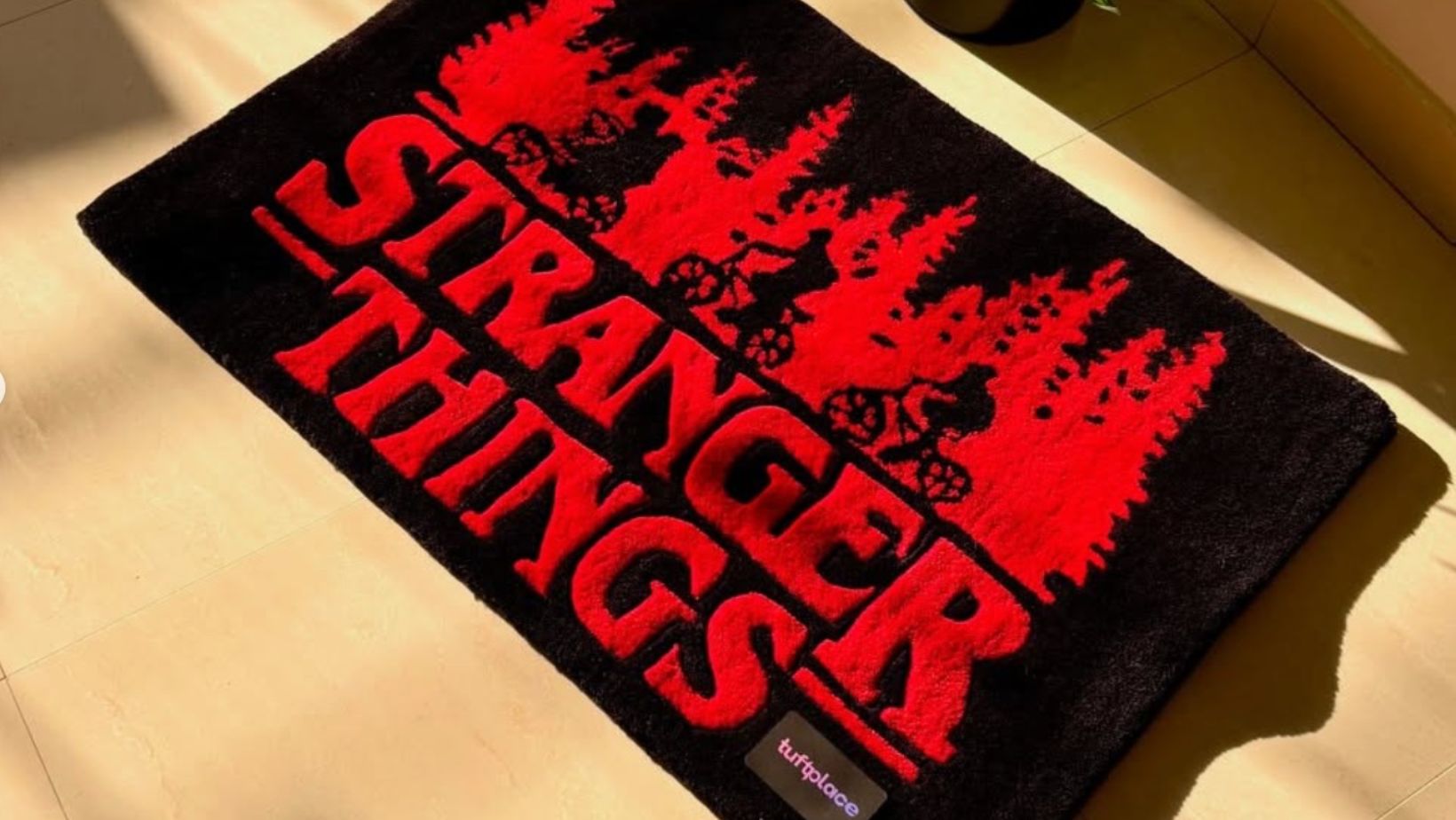
Why Letters Are Particularly Challenging in Tufting
Lettering often looks perfect on a screen or on paper, but different rules apply when tufting. The yarn has volume, the lines are not razor-sharp, and every curve becomes slightly softer.
That is exactly why classic typography cannot be transferred one-to-one. Anyone who ignores these specifics risks unreadable letters, blurred transitions, and an overall restless result.
In tufting, it is less about fine details and more about optical clarity through reduction.
Which Fonts Can Be Used for Tufting
Not every font is suitable for tufting. Sans-serif, uniform fonts with clear lines and open shapes work particularly well. Thin strokes, strong contrasts, or decorative flourishes almost always lead to problems.
When tufting, letters need enough space so that the yarn can settle cleanly. Round letters such as O or S must be planned wider than you may be used to from graphic design. A good rule of thumb is: if a font already appears very delicate digitally, it is unsuitable for tufting.
One of the most common mistakes is lettering that is too small. In tufting, the rule is: Bigger is almost always better. Small letters quickly lose their shape, especially in longer texts. The spacing between letters also plays a decisive role.
Lettering set too tightly visually merges together, even if each individual character is tufted correctly. Therefore, consciously plan generous spacing and clear proportions so that each word can stand on its own.
Long words are more difficult to tuft than short ones. The longer a word is, the higher the risk of visual imbalance in the overall composition. Make sure that the lettering is not placed too close to the edge of the rug.
The spacing between multiple lines should also be larger than in a classic layout. Tufting needs space so that the shapes can breathe and do not visually collide.
Line Guidance and Yarn Control When Tufting Letters
Line guidance determines readability. Unsteady movements or inconsistent pressure lead to wavy contours. Especially with straight letters such as E, L, or T, any deviation is immediately noticeable.
Make sure to guide the tufting gun evenly and steadily. Curves should be worked slowly and consciously so that they do not appear angular or uneven. The yarn tension must remain constant, as yarn that is too loose will cause the letters to fray.
Why Simple Letters Work Better
In tufting, less is almost always more. Lettering should be deliberately simplified without losing its identity. Inner spaces such as those in A, R, or B must be designed larger so that they remain visible after shearing.
Very small details disappear at the latest during finishing. Anyone preparing lettering for tufting should therefore not embellish it, but think functionally. Readability always comes before decorative design elements.
The Importance of Correct Contrast and Color Choice
Even the best lettering loses its impact if contrast is missing. Light lettering on a light background or dark tones without clear separation make reading considerably more difficult. In tufting, yarn often appears less contrast-rich than ink on paper due to its texture.
Therefore, choose strong color contrasts that work under different lighting conditions. This point is particularly crucial for lettered rugs intended for walls or floors.
How Do You Tuft Clearly Readable Lettering?
Clearly readable tufted lettering is achieved through clear sans-serif fonts, generous letter sizes, consistent line guidance, and strong color contrast. Those who simplify letters, leave sufficient spacing, and work precisely during shearing achieve significantly better results. The key is not to treat tufting like graphic design, but as its own medium with its own rules. When these principles are followed, tufted lettering remains clear, professional, and easily readable even from a distance.